Research Projects
To learn more about recent research in the Family Development Lab, see project descriptions below or contact us at familylab@unl.edu
For a complete list of publications visit Google Scholar or ResearchGate.
Active Projects
The Family Development Project (2016-current) is a multi-method, longitudinal study examining (a) how couples navigate the pregnancy-postpartum transition, (b) key factors impacting intimate relationship functioning and the mental health of parents, and (c) early family influences on child health and development from pregnancy to preschool. Check out our study website where we describe each wave of data collection and provide brief summaries of findings from recent publications. This study has been supported by the University of Nebraska-Lincoln (UNL), UNL's RDAR Center, the Great Plains IDeA-CTR, and the National Institutes of Health.
The Family Emotional Security Project (2026-current) examines how the quality of the relationship between parents during a child's first three years of life influences the development of emotion regulation. Funded by the National Institutes of Health (NICHD), we are studying how both conflict and emotional intimacy between parents shape the family environment, parenting behaviors, and children's emotional adjustment. By following 250 families from infancy through preschool, this project aims to identify the early family experiences that help children develop strong emotion regulation skills and reduce risk for later mental health difficulties. See the study website for more information.
The Dehumanization and Objectification in Couples Project (2024-current) examines how partners recognize, value, and respect one another as whole people within intimate relationships. We are investigating dehumanization (treating a partner with disregard or denying their individuality and autonomy) and objectification (reducing a partner to their appearance or sexual value or reproductive functions), with the goal of identifying the factors that contribute to these processes and their consequences for relationship and family functioning. This work has led to the development and validation of several measures, including the Individuality in Couples Questionnaire (ICQ), Dehumanizing Deindividuation in Couples (DDC) Scale, and Inventory of Partner Sexual Objectification (IPSO). See Family Lab Measures Website for more information.
The Reproductive Objectification Project (2026-current) examines how women may be reduced to their appearance, sexual value, or reproductive function during pregnancy and the postpartum period. In this large-scale, longitudinal study of women followed from pregnancy through the postpartum transition, we are investigating multiple forms of objectification, including objectification by society, intimate partners, and the self. We are particularly interested in understanding how these experiences shape maternal mental health, relationship functioning, and children's early development. Given the alarmingly high rates of intimate partner violence and partner-perpetrated homicide during pregnancy, this work also examines how dehumanizing and objectifying treatment by intimate partners may contribute to relationship aggression and risk for IPV during this vulnerable transition.
The Daily Experiences of Sexual and Gender Minority Couples Project (2022-current). The primary objectives of this project are to identify (a) forms of discrimination, stigmatization, and marginalization experienced on a day-to-day basis by sexual and gender minority couples, (b) how daily minority stress contributes to alcohol-induced intimate partner violence (IPV), and (c) sources of resiliency within the intimate relationship and from the community that help couples navigate stress and adversity to promote health and well-being and prevent IPV. This work has been funded by the National Institutes of Health (NIAAA) and the University of Nebraska-Lincoln.
Past Projects
The Healthy Couples Project (2019-2021) was an investigation of intimate relationship processes promoting the health and well-being of individual partners. We aimed to understand how partners support one another during times of adversity (e.g., during the COVID-19 pandemic) and communicate respect and acceptance toward one another. We also aimed to understand how to promote a high quality and satisfying sexual relationship that does not involve objectification or dehumanization of either partner. This study was supported by the UNL Department of Psychology and ORED. One of the key publications form this project was the validation of the Individuality in Couples Questionnaire (ICQ).
The Daily Experiences of Sexual and Gender Minority Couples Living in Rural Nebraska Project (2020-2022) was a mixed-methods study that aimed to identify forms of discrimination, stigmatization, and marginalization experienced on a day-to-day basis by sexual and gender minority couples living in rural communities in Nebraska and understand the unique relational challenges of LGBTQ+ couples living in rural communities in the Midwest. This work was supported by the UNL Minority Health Disparities Initiative (MHDI).
Increasing Community Access to Research
We support and maintain two research registries. Community members are invited to join if they would like to receive updates about research opportunities. Click on a link to learn more.
A Collaborative Approach to Research
The Family Lab routinely collaborates with several UNL research groups including the Pediatric Health Lab, the Developmental Cognitive Neuroscience (DCN) Lab, the Violence Intervention for Survivors of Trauma and Abuse (VISTA) Lab, the Objectification of Women Lab (OWL), the Sexual Assault and Sexual Health (SASH) Lab, the Hope Lab, and the Women, Immunity and Sexual Health (WISH) Lab.
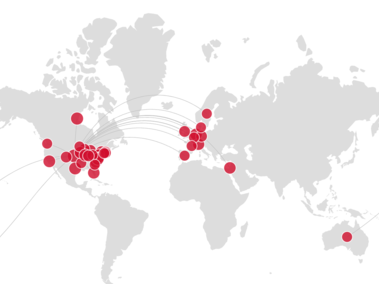
We have also engaged in collaborations across the globe.